The places where we live affect every aspect of our lives: from the people we meet to the food we eat. This extends to our economic lives as well. Where you live determines where you can go to school, what jobs you can get, what you pay in taxes, and what government resources are available to you.
Place in the American economy
Even within the United States, there are major economic disparities from place to place. At a very local level, the neighborhood where a person grows up has a huge effect on their economic mobility (their ability to earn more than their parents). At a broader level, different regions specialize in different industries, so some are more affected by economic changes than others. In the '90s and '00s, regions of the country which competed the most with Chinese manufacturing saw greater job losses and wage shrinkage than comparable areas. One of the major ongoing changes is the green energy transition. Now and in the next decades, some parts of the country will face much larger challenges (or opportunities) than others as we shift away from fossil fuels towards more sustainable energy.
Looking at specific statistics shows how much economic conditions vary within the country. The maps in this post come from our platform and present data for each commuting zone. The one below shows the dramatic differences between places with the highest and lowest joblessness rates: from 15% all the way to 50%. (You can read more in other posts about commuting zones and joblessness to learn what they are and why they are important.)
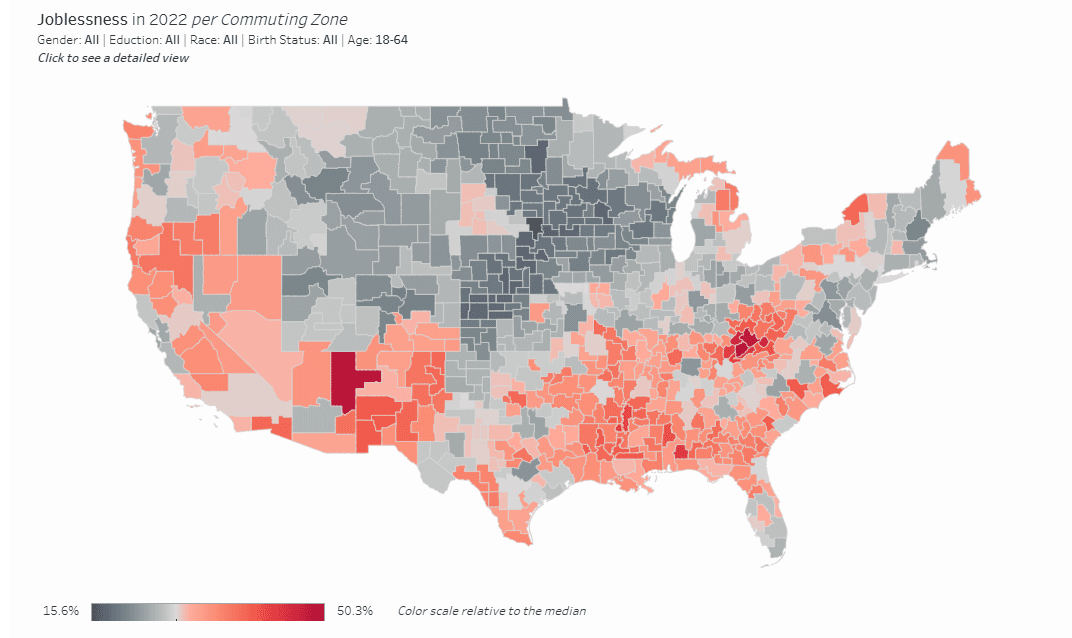
What drives these disparities? Perhaps the most widely known factors are international trade and technological change. Outsourcing, international competition, and automation have gutted many industries, especially manufacturing, which used to provide stable income for middle-class Americans. The decline of unions has also played a role; historically, unions decreased income inequality and their recent decline has caused an increase (at least for working men). Importantly, some places were far more exposed to these changes than others, so they have contributed to place-based inequality.
Race has also been a contributing factor. A long history of racial violence and exclusion, including practices like redlining against black Americans (financial discrimination based on race — especially for housing and mortgages), has led to segregation and persistent inequality by place. This mostly creates inequality within a local area, but it creates inequality across regions, too.
Compounding all these issues are place-based spillovers. As education, technology, and research concentrate in a small number of cities, people in those cities have been able to share knowledge at the local level. This has led to productivity growth and investment in those cities, while other places, while other places, like smaller cities and rural areas, have struggled to attract investment and job opportunities.
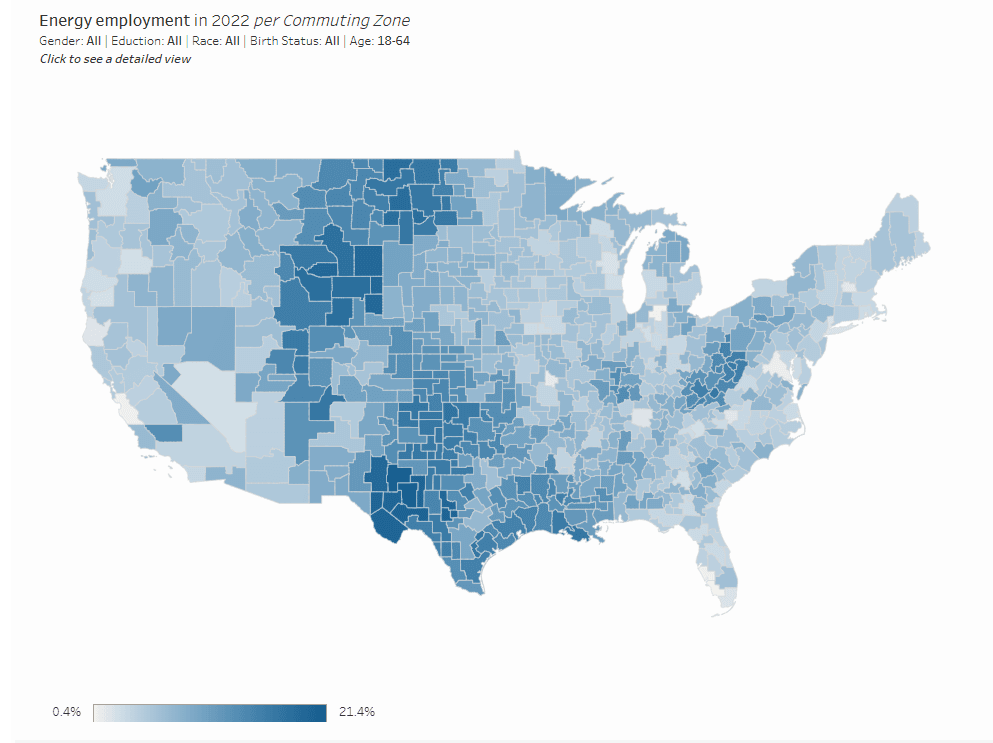
The green energy transition will likely create new place-based inequalities (or make existing inequalities worse). The map below shows that in some places energy jobs make up less than a percent of the workforce, while in others they are over 20%. Local economies that are dependent on fossil fuels will likely lose many jobs in the next few decades.
Place-based policy
Although many of the underlying economic changes were inevitable, and in some cases good for Americans as a whole, the resulting inequalities could have been lessened with better policy.
For the most part, the assumption among policymakers was that businesses would invest in areas where wages were low to take advantage of cheap labor and that people would move to places where wages were high to earn more money. This market self-correction would limit place-based inequality.
However, this isn’t exactly what has happened. Instead, the people moving for better wages have largely been those with the most earning potential — leaving behind communities that are not attractive for investment. On top of that, as people leave a place, local housing prices go down. This is a major drain on the people who stay since houses are often the biggest financial asset that people have. So, the richest places have become richer and the poorest places have become poorer.
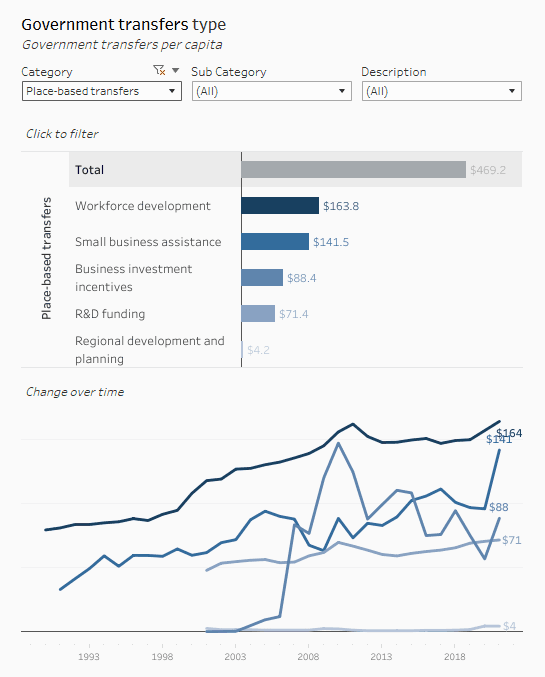
The natural response is place-based policies: policies which target the needs and opportunities in specific geographic areas. This might include assistance to businesses, infrastructure investments, enterprise zones, as well as education, workforce, and land development. Many place-based policies also involve creating a regional strategy to help solve coordination problems within a place.
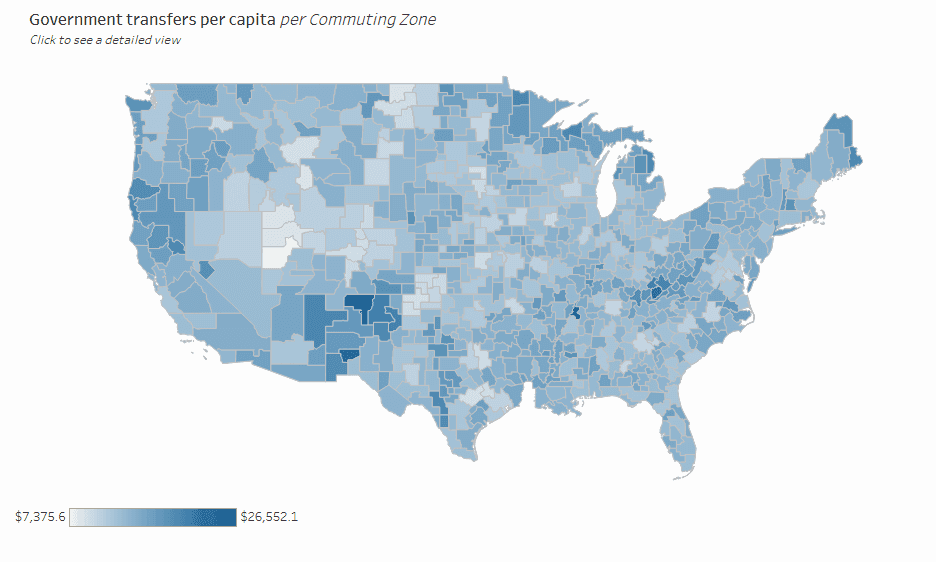
Place-based policies are distinct from individual-based policies such as welfare and Social Security. These sorts of policies can help people meet basic economic needs, but they don’t necessarily change the productive capacity of local economies. Individual transfers don’t create “big push” investments which can fundamentally redirect local economies and create the sort of spillovers mentioned above.
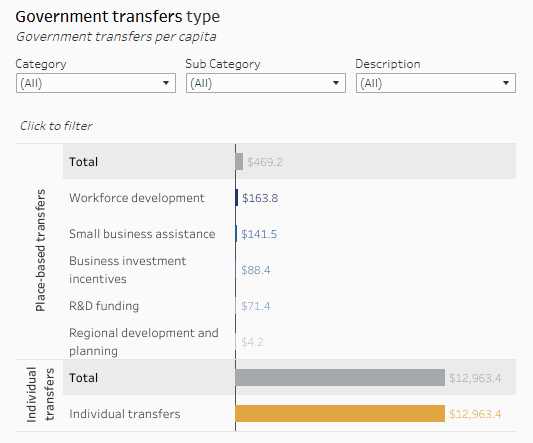
Right now, far more money is dedicated to individual policies than place-based policies, but place-based policies are becoming more popular.
The Economy in Place
To understand and implement place-based policies, people need data. This platform is intended to equip economists, policy makers, academics, and media with more complete, up-to-date place-based data for over 740 local labor markets.
You can find extensive information on the economic conditions of each of these areas, including data on employment rate, hours worked, and population growth. The data are available over multiple decades and are broken down with detailed demographic information such as race and gender. We specifically highlight conditions in the energy sector to monitor and better predict the consequences of the green energy transition. The platform also shows public policy flows to each particular region for both individual- and place-based policies. For more detail on a particular place, we have in-depth place profiles.
Together, the platform paints a detailed picture of economic outcomes and policy interventions within a region, allowing users to get a better understanding of the role of the economy in place.