Our Research
Our work at the Reimagining the Economy Project is anchored around place-based policies and local labor markets
Our current and upcoming work focuses on how place-based policies work, their targeting effectiveness, the institutions undergirding their implementation, and the place-based impacts of economic policies and shocks.

Where Have All the Good Jobs Gone? Changes in the Geography of Work in the US, 1980-2021
Gordon Hanson and Enrico Moretti
We examine changes in the spatial distribution of good jobs across US commuting zones over 1980-2000 and 2000-2021. We define good jobs as those in industries in which full-time workers attain high wages, accounting for individual and regional characteristics. The share of good jobs in manufacturing has plummeted; for college graduates, good jobs have shifted to (mostly tradable) business, professional, and IT services, while for those without a BA they have shifted to (non-tradable) construction. There is strong persistence in where good jobs are located. Over the last four decades, places with larger concentrations of good job industries have tended to hold onto them, consistent with a model of proportional growth. Turning to regional specialization in good job industries, we find evidence of mean reversion. Commuting zones with larger initial concentrations of good jobs have thus seen even faster growth in lower-wage (and mostly non-tradable) services. Changing regional employment patterns are most pronounced among racial minorities and the foreign-born, who are relatively concentrated in fast growing cities of the South and West. Therefore, good job regions today look vastly different than in 1980: they are more centered around human-capital-intensive tradable services, are surrounded by larger concentrations of low-wage, non-tradable industries, and are more demographically diverse.
The U.S. Place-Based Policy Supply Chain
Gordon Hanson, Dani Rodrik, and Rohan Sandhu
Place-based policy in the United States comprises a wide range of government programs that are spread across federal, state, and local agencies and that rely on public, private, and nonprofit organizations for policy design and implementation. We document how loosely connected vertical policy supply chains distribute resources from federal and state governments to recipients at the local level. The apparatus is the product of 150 years of policy innovation, both from the top down, with the federal government periodically launching major initiatives whose place-based impacts tend to be long-lived (even if the specific policies are not), and from the bottom up, with state and local actors engineering their own policy solutions, many of which have endured and now constitute modern policy practice. That practice includes not just tax incentives for business investment, the subject of most economic research on place-based policy, but support for community redevelopment, workforce development, small business promotion, technological innovation, and regional planning and strategy. Intermediary organizations that connect government agencies to local recipients are central to resource delivery. Because they tend to be created, funded, and (or) run by non-state actors, there appears to be wide geographic variation in organizational capacity for place-based policy. Understanding the causes and consequences of that variation is needed for a full accounting of how place-based policy works in the U.S.
Local Labor Market Impacts of the Energy Transition: Prospects and Policies
Gordon Hanson
Society’s transition toward more sustainable energy sources is well underway, but substantially reducing the use of fossil fuels in everyday life will profoundly disrupt the communities that currently dedicate themselves to carbon-intensive industries. In his chapter, “Local Labor Market Impacts of the Energy Transition: Prospects and Policies,” author Gordon Hanson considers the potential for adverse labor market consequences from the energy transition and the suitability of existing policies to counteract them. Particularly, he discusses how to avoid repeating the painful adjustment to globalization and automation, which brought long-lasting economic distress to labor markets specialized in manufacturing.
Trading Places: Mobility Responses of Native- and Foreign-Born Adults to the China Trade Shock
David Autor, David Dorn, and Gordon Hanson
Previous research finds that the greater geographic mobility of foreign-born workers compared to native-born workers facilitates labor market adjustment to shifting regional economic conditions. The authors examine immigration’s role in enabling US commuting zones to respond to manufacturing job loss caused by import competition from China. Although foreign-born population headcounts fell by a larger proportion than those of the native-born in trade-exposed regions, the contribution of immigration to labor market adjustment in the study period was small. Because most US immigrants arrived in the country after manufacturing regions were already mature, few took jobs in industries that later saw import surges. The foreign-born population share in regions with high trade exposure was only three-fifths that of regions with low trade exposure. Immigration may do more to aid adjustment to cyclical shocks, in which job loss follows recent hiring booms, than to aid adjustment to secular decline, in which hiring booms occurred longer ago.
Behind the data
Share your stories
Business Incentives as Place-Based Policy

The Changing Role of Regional Planning and Development

New Growth in an Older Industrial City: Allentown, PA with Trevor Tormann
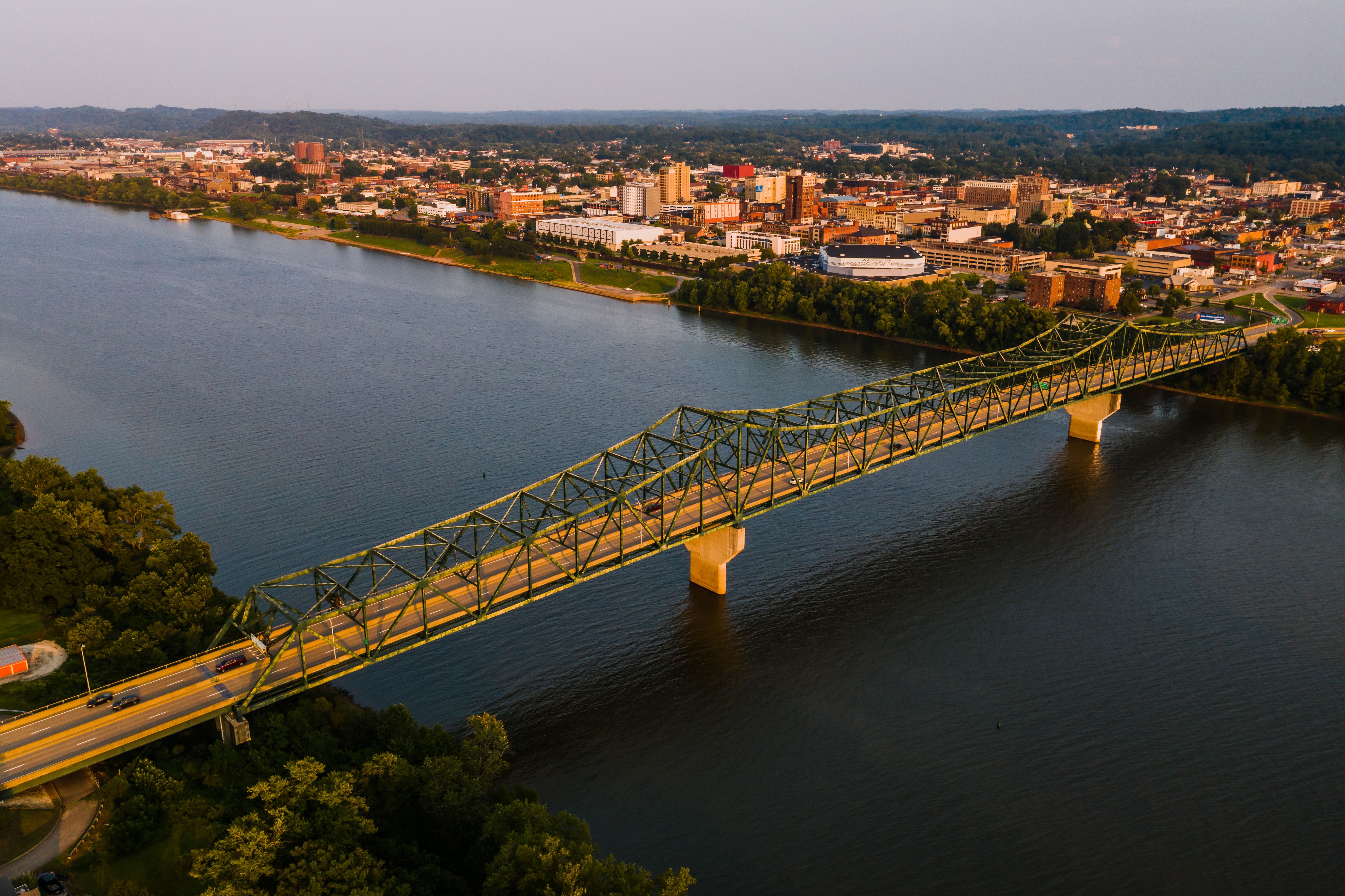
Perspectives on West Virginia with Cassidy Riley of Coalfield Development

Racial Disparities in Joblessness in South Dakota

What Makes Sioux Falls, SD Special

Where Federal R&D Dollars Go and What These Places Look Like

Energy Transition in the Gulf Coast

How-To: Exploring Joblessness

Understanding Our Data

Is the US missing out on renewable energy potential?

Economic Development in West Michigan

Economic Development and Technology Transformation in Tulsa, Oklahoma

Economic Development in Rochester, NY

Recompete in Birmingham, Alabama

Place Matters

Joblessness: What and Why

Introduction to the Energy Economy Dashboard

How-To: Exploring Workforce Development